
If you’ve swam at Hoyt Park, or dipped your toes in the water along the Lake Michigan shoreline in Milwaukee, you’ve got laboratory professionals to thank for monitoring water quality day-after-day. For the past four years, Rebeca Pinhancos had been responsible during summers for testing and monitoring microcystins in the city’s lakes. Primarily, she worked in Lead analysis as a chemist at the City of Milwaukee Public Health Department (MPHD). At this point in her life, she knew she needed a change in her career. Nearly a decade ago, Rebeca started her educational journey in Analytical Chemistry at UW-Madison. Then, what drew her to her studies was the desire to solve problems using the power of scientific inquiry and analysis. Today, it is this very same desire that pulls her back to learn more, but this time while she works.
Rebeca began to research job positions at hospitals, and had discovered that degrees specializing in clinical laboratory science exist! She learned that many, if not most, certified medical laboratory scientists obtained their educational requirement for certification this way. Little did she know that during her research she would find an alternative path to certification through the State of Wisconsin’s first and only Medical Laboratory Science (MLS) apprenticeship program.
Rebeca Pinhancos is one of the first two participants in the MLS apprenticeship program, which was launched in January 2022 by Mike Baron at Milwaukee-based Wisconsin Diagnostic Laboratories (WDL). At the time of hire, Rebeca knew she was going to be an excellent asset and have a lot of growth opportunity from the start, with her degree and 10 years of experience in Liquid Chromatography, Mass Spectrometry (LCMS). She was pleasantly surprised to learn several months later on the job that WDL would be directly supporting her track to certification by offering her inaugural participation in the MLS apprenticeship program. The MLS apprenticeship program, was designed to provide an alternative path to certification for individuals with relevant science degrees. The apprenticeship model, applied as a recruitment and retention strategy within the Clinical Laboratory Science profession, may provide the kind of quality training, instruction, support, and institutional capacity-building to help address the problem of staffing shortages at clinical laboratories.
“When I was approached with the apprenticeship proposal, I thought, wow, you are also going to pay for my schooling too?! That’s great,” Rebeca said. Rebeca added that when she started attending classes at MATC, she ran into one of her former students, who was very surprised to see her there heading to a classroom, and not as an instructor this time. Before coming to work for WDL in 2021, Rebeca also served as an Instructor of Biochemistry at Milwaukee Area Technical College (MATC) for a two years. Attending MATC under the apprenticeship program certainly has given Rebeca a lot of unique perspective, having now both attended and taught classes at the institution.
“I am really grateful that the coursework is an important component of my experience as an apprentice. You really need the coursework to put the bench work into context,” said Rebeca. “You can train people to run the benches; but, if you encounter something unexpected and you do not know why it happened, the coursework aids you in readily identifying the problem, and how to pivot to find a solution.” With just over 75% of the apprenticeship program completed, Rebeca will begin preparing for the exam to become certified in Chemistry in 2023. Afterwards, once she gets enough qualifying hours on the Hematology bench, she will take the exam to become certified in Hematology.
She is looking forward to the next cohort of apprentices at Wisconsin Diagnostic Laboratories. “With any new program, there is more opportunity to improve and grow,” Rebeca said, adding that she is grateful to be a part of that experience, and to extend what she’s learned to the new participants next year. “I really like the idea of alternative approaches to Clinical Laboratory Science. It’s kind of how we have to operate these days,” Rebeca said. “Not everyone starting out school is going to know that they want to be working at a hospital as a clinical laboratory scientist.”
For qualified candidates interested in joining the MLS apprenticeship program, individuals with a relevant science degree, in chemistry or biology for example, are encouraged to visit WDL’s career webpage and explore their non-certified technologist positions currently open. Apprentices are hired on a rolling basis, as non-certified positions become available. On-the-job training begins once hired, with classroom instruction beginning at the start of the new semester. To learn more about Wisconsin Diagnostic Laboratories, visit: www.wisconsindiagnostic.com

 In partnership with the State of Wisconsin and Milwaukee Area Technical College (MATC), Mike and the rest of his team at Wisconsin Diagnostic Laboratories (WDL) launched the MLS Apprenticeship program in January 2022. Individuals with science degrees from an accredited four-year college or university are recruited to become certified medical laboratory professionals upon completion of the apprenticeship program. Once a candidate is hired, WDL provides the hands-on experience to attain the skills, which is accompanied by on-site or in-the-classroom curriculum provided by MLS instructors at the Milwaukee Area Technical College and Madison College. The MLS apprenticeship program is a Wisconsin Certified Apprenticeship, meaning that the State of Wisconsin’s Department of Workforce Development partners with industries, area technical colleges, and private training centers throughout the state to provide individuals a path to a career. Historically, many technical industries in Wisconsin, from cheese processing to building construction, have been the primary sites for apprenticeships. Mike Baron recognized within the apprenticeship model the kind of quality training, instruction, support, and institutional capacity-building that could benefit clinical laboratories greatly. These are the qualities Mike says, that make the MLS apprenticeship program a key strategy in the recruitment and retention of medical laboratory professionals.
 On July 11, 2022, CMS and CDC issued a final rule [CMS-3355-F] to update proficiency testing (PT) regulations related to analytes, acceptable performance for laboratories, and administrative processes for proficiency testing programs established under the Clinical Laboratory Improvement Amendments of 1988 (CLIA). The final PT rule considers improvements in accuracy and precision of testing since 1992 and new and emerging technologies.





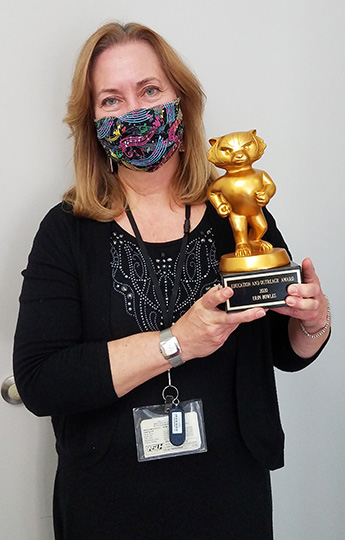 As a clinical lab professional, Erin participated in the WSLH’s Virology and TB Networks. She remembers the first outreach to the clinical laboratories when Pete Shult, then director of the Communicable Disease Division (CDD) at WSLH, and Carol Kirk, the original WCLN Coordinator, developed the WCLN. When the WSLH was hiring an assistant WCLN coordinator, Erin was intrigued. Erin actually heard about the job through a fax that came across her desk; as many of us may remember, this was during a time when fax machines were more commonly used than today.
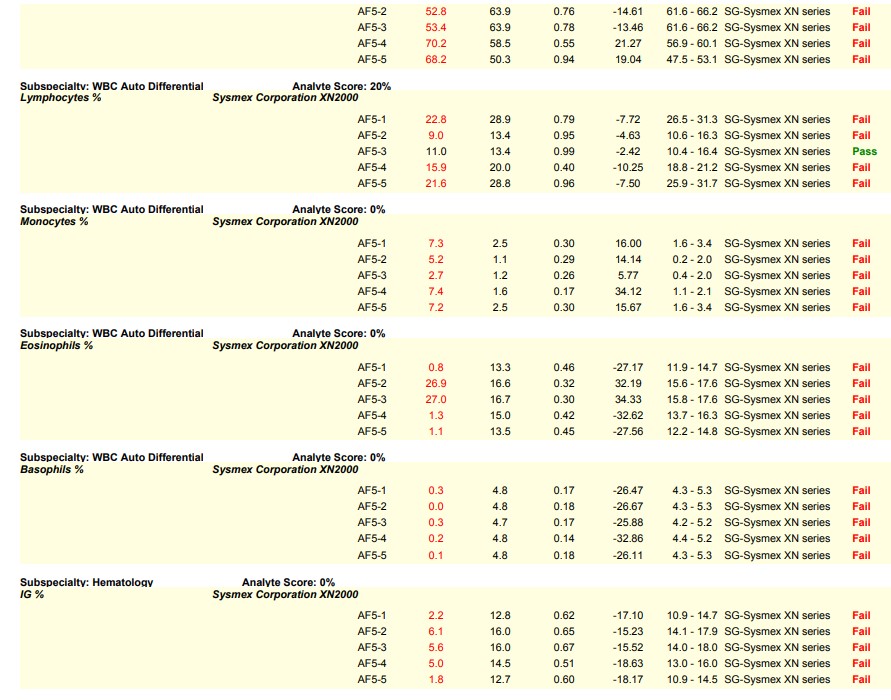
 Erin adds that WSLH PT’s educational bioterrorism preparedness exercise also helps laboratory professionals become more mindful of the longer 48-to-72 hour slow growth typical of hazardous pathogens, like Brucella sp. or Francisella sp. Most pathogens you encounter typically grow in about 24 hours.