Medical laboratory professionals spend years refining their technical skills. In the laboratory, we are trained to be high-performers—meticulous, accurate, and self-motivated. However, when that consistent performance leads to a promotion, many scientists find themselves facing a frustrating paradox: the very self-reliance that made them successful at the bench can become a barrier to succeeding as a personnel manager.
“The criteria that made you a really good performer at the bench is not the same set of skills that you are going to need at the next level,” says Nancy Alers, MS, MT, (ASCP)cm, CQIA, CQ/OE, CLC, founder of Improov Labs, a laboratory performance consulting firm.
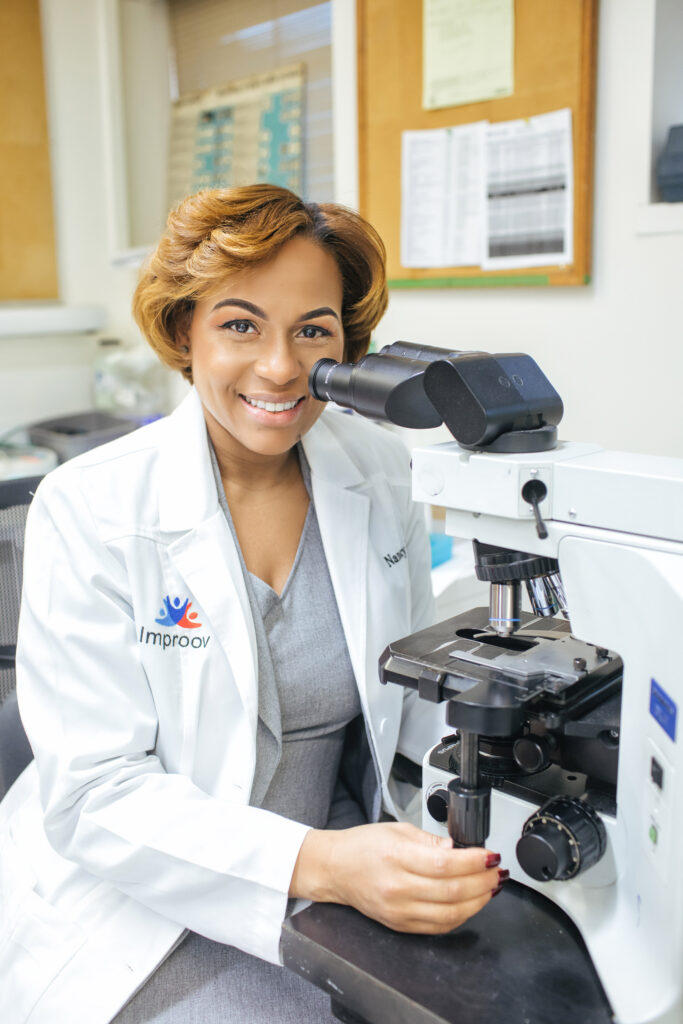
Nancy Alers, MS, MT, (ASCP)cm, CQIA, CQ/OE, CLC, founder of Improov Labs
Nancy Alers’ own path reflects this evolution. Alers has spent over two decades navigating every level of the laboratory, from Navy bench tech to Director of major contract accounts. Now, as the Assistant Director for Lab Operations and Quality at Montefiore and founder of Improov Labs, Alers has developed a new leadership development program grounded in decades of real laboratory experience.
“I’ve been in their shoes; and, I know exactly what they are going through,” said Alers. “I created the program that I wished I had earlier in my career.”
The From Bench to Leader coaching program was developed specifically for laboratorians who are ready to grow professionally and better understand the non-technical skills required to move into leadership roles. Built from real-world laboratory experience, the program focuses on the mindset, communication, and leadership capabilities needed to succeed beyond the bench.
Navigating New Territory in Lab Management
Many high-performing scientists find themselves in a state of professional stagnation, not because they lack the ability to lead, but because they cannot visualize the daily realities and requirements of a management role. Without a clear bridge between the bench and the front office, the realities of personnel management often feel more complex than the most challenging diagnostic work.
“Oftentimes, people are not confident because they don’t really know what is on the other side,” says Alers. To navigate this unknown territory, participants begin with a leadership self-assessment, a structured tool designed to help them understand how they naturally lead, communicate, and make decisions. This process of self-discovery is what Alers calls the most critical mindset shift in the program: moving from the role of an individual contributor to that of a leader. As Nancy explains, this shift in thinking transforms the professional from a “problem solver” focused on the bench into a “problem framer” who can identify and address big-picture organizational challenges.
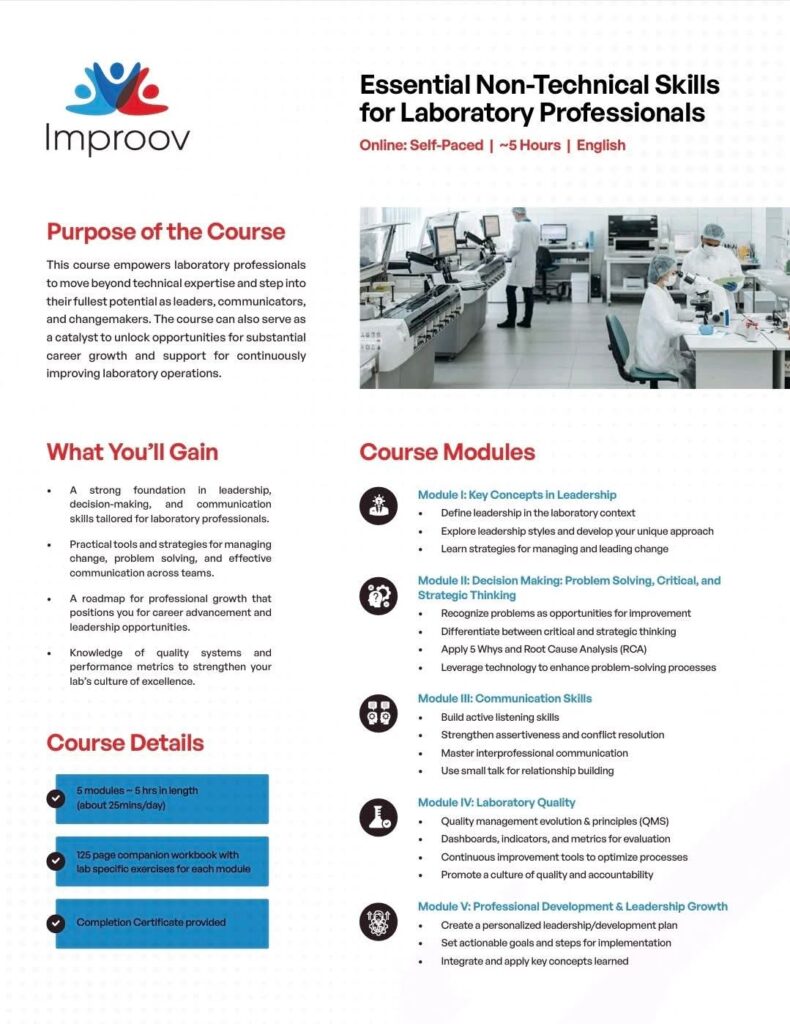
The Four Pillars of Laboratory Growth
At the heart of this evolution is the belief that you cannot truly manage a laboratory system until you understand the person running it. The program is built on four core pillars designed to support the transition from being an individual contributor to an effective leader:
- Professional Self-Awareness: Identifying your unique value and natural leadership tendencies.
- Communication & Influence: Moving from solving problems with instruments to framing solutions for people.
- Systems Thinking: Understanding the entire “A-Z” value chain of the laboratory to influence quality improvement.
- Conflict Resolution: Utilizing emotional intelligence to navigate the human dynamics that influence lab morale and retention.
A Closer Look: The Leadership Journey
If the Four Pillars of Laboratory Growth are the foundation of the From Bench to Leader coaching program, then the curriculum is the roadmap. The program’s curriculum is designed to facilitate a fundamental shift in how a laboratory professional steps into a leadership position.The program begins with a structured leadership self-assessment to ground participants in their leadership approach. Participants first gain a baseline understanding of their own unique strengths. Then, by gaining an understanding of how they naturally lead and communicate, participants learn how they can coordinate and delegate in a way that aligns with the strengths of their team members.
Once a leader’s strengths are clearly understood, the focus shifts to the laboratory as a whole. Rather than viewing the lab as a series of isolated tests, participants learn to see the entire “A-Z” value chain. This systems-thinking approach enables participants to develop a sense for strategic oversight. As a result, participants can stop “fixing” and start “influencing,” moving from the role of an individual contributor to a proactive leader.
The program concludes by teaching leaders how to align these systems with the lab’s most critical resource: its personnel. By identifying and coordinating the collective strengths of the team, the leader ensures the department maintains the high standards of precision and quality expected in clinical work. This transition allows the laboratory to scale its impact, achieving excellence through team empowerment and structured oversight rather than individual technical intervention.
Personal Development: From Bench to Leader
The transition from bench to leadership is more than a title change; it is a professional evolution. Nancy Alers’ own career path proves that the precision of a scientist and the collaborative mindset of a leader are not mutually exclusive, but rather a powerful combination when bridged with the right tools. Successfully navigating this transition requires moving beyond a reliance on individual technical skills to developing the non-technical leadership skills that provide visibility into the strategic demands of the “other side” of the bench.In an industry currently defined by staffing shortages and increasing diagnostic complexity, the demand for self-aware, strategic leadership is critical. For scientists seeking career advancement or new supervisors navigating their first roles, this approach, supported by a structured coaching program, offers a clear methodology for transitioning from a technical expert into a strategic leader.
“The future of the laboratory depends not just on our technical expertise, but on how well we lead people, communicate, and make decisions,” says Alers.
To learn more about the From Bench to Leader program, connect with Nancy Alers on LinkedIn.